Booking choice: The small-group Classico half day, from $170 per person. Check dates Tour details
Plain "Chianti" and "Chianti Classico" are two separate wines with separate rules. Classico comes from a defined zone of about 71,800 hectares between Florence and Siena and carries the black rooster. Chianti DOCG covers a much larger area around it, in eight subzones from Pisa to Arezzo.
Both can be very good. The reason it matters for a tour is simple: a day sold as "Chianti" may never enter the Classico hills. Below is what each label means, and where each tour on this site actually pours.
The quick answer
Chianti Classico is the core zone between Florence and Siena, marked by the black rooster seal and made with at least 80% Sangiovese. Chianti DOCG is the wider ring around it, with eight subzones and a minimum of 60% Sangiovese. San Gimignano, Monteriggioni and Impruneta are outside Classico. On this site the Classico half day, the Gray Line half day, the private tour, the Siena half day and the Greve winery visit taste inside the zone.
What is the difference between Chianti and Chianti Classico?
Chianti Classico is a separate, smaller DOCG from the historic core between Florence and Siena, with stricter grape rules. Chianti DOCG is the large surrounding area.
The two side by side, from the Chianti Classico consortium and Italian Wine Central:
| Chianti Classico DOCG | Chianti DOCG | |
|---|---|---|
| Where | Between Florence and Siena: Greve, Castellina, Radda, Gaiole, parts of 4 more communes | A wide ring from Pisa to Arezzo, in 8 subzones |
| Symbol | Black rooster (Gallo Nero) seal on the neck | No rooster |
| Sangiovese | Minimum 80%, white grapes not allowed | Minimum 60% (75% in Colli Senesi), up to 10% white grapes |
| Vineyards | 5,122 ha (2021) | 13,716 ha (2021) |
| Top tiers | Annata, Riserva, Gran Selezione | Superiore, Riserva |
| Separate DOCG since | 1996 | 1984 |
Taste the real Classico: two estates on the Chiantigiana road, up to seven wines, eight seats in the van.
Check dates for the small-group Classico half dayWhere exactly is the Chianti Classico zone?
Between Florence and Siena: all of Greve, Castellina, Radda and Gaiole, plus parts of San Casciano, Barberino Tavarnelle, Castelnuovo Berardenga and Poggibonsi.
Its borders go back to an edict of Cosimo III de' Medici in 1716, one of the first legal wine zones anywhere. The SR222, the road everybody calls the Chiantigiana, runs straight through it: Florence, Strada in Chianti, Greve, Panzano, Castellina, then down to Siena. Most half-day tours drive it.
What sits outside: Florence's own hills at Impruneta (Chianti Colli Fiorentini), Siena city just to the south, San Gimignano to the west, and Monteriggioni. All of those are wonderful places. They just aren't Classico.
What does the black rooster on Chianti Classico mean?
It is the seal of the Chianti Classico consortium, printed on the neck of every bottle. Plain Chianti may not use it.
The rooster was the emblem of the medieval Chianti League, the military alliance of Castellina, Radda and Gaiole. Today the band on the neck works as a guarantee: the wine comes from the zone, passed the rules and was checked. Look for it in any enoteca. A bottle labelled "Chianti" without it comes from the wider area.
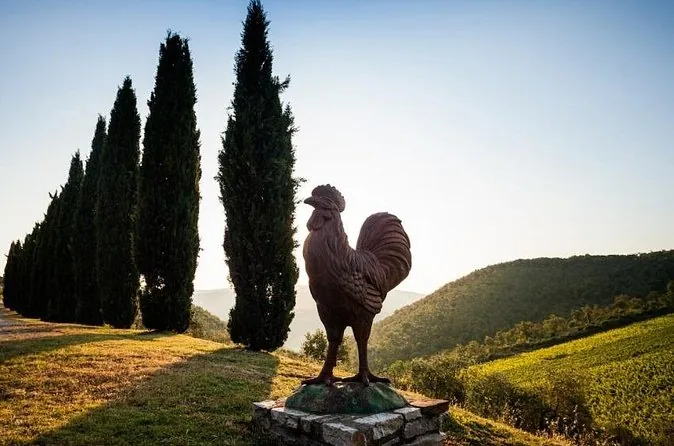
You will see the rooster everywhere in the zone: on road signs, on cellar doors and as statues in the vineyards.
What are Riserva, Gran Selezione and the UGAs?
Three quality steps: Annata (about one year), Riserva (24 months) and Gran Selezione (30 months, estate fruit). UGAs are the village names now allowed on Gran Selezione labels.
The ageing and alcohol rules, from Italian Wine Central:
| Level | Minimum ageing | Min. alcohol | Note |
|---|---|---|---|
| Chianti Classico (Annata) | Released from 1 October of the year after harvest | 12% | The everyday bottle |
| Riserva | 24 months, 3 in bottle | 12.5% | Often from the best plots |
| Gran Selezione | 30 months, 3 in bottle | 13% | From the 2027 vintage: at least 90% Sangiovese, native grapes only |
The UGAs (unità geografiche aggiuntive) are 11 village areas: Castellina, Castelnuovo Berardenga, Gaiole, Greve, Lamole, Montefioralle, Panzano, Radda, San Casciano, San Donato in Poggio and Vagliagli. You will see them on Gran Selezione labels. The 2027 change is explained in the Gran Selezione rules post.
What are the eight Chianti subzones?
Colli Aretini, Colli Fiorentini, Colline Pisane, Colli Senesi, Montalbano, Montespertoli, Rufina and Terre di Vinci.
- Colli Fiorentini: the hills just south of Florence, including Impruneta. The e-bike day rides here.
- Colli Senesi: around Siena, San Gimignano and Montalcino; the strictest subzone, with 75% Sangiovese.
- Rufina: north-east of Florence, cooler and higher, with a few estates as old as any in Classico.
- Colli Aretini, Colline Pisane, Montalbano, Montespertoli, Terre di Vinci: further west and east; rarely on tour itineraries.
A subzone wine names the subzone on the label ("Chianti Rufina"). Plain "Chianti" can come from anywhere in the area.
Are Super Tuscans Chianti?
No. Super Tuscans are usually labelled Toscana IGT, a looser category, even when they come from estates inside Chianti Classico.
They started in the 1970s, when producers wanted to blend Sangiovese with Cabernet or Merlot, or skip the white grapes the old Chianti rules required. Antinori's Tignanello, from vineyards in the Classico zone, is the best-known example. Many Classico estates make one next to their Chianti Classico, and tasting flights often finish with it.
The wine and olive oil trail has a semi-private option for eight with a certified wine expert and a Super Tuscan focus. Antinori's EUR 30 tasting pours Chianti Classico Riserva next to a Brunello.
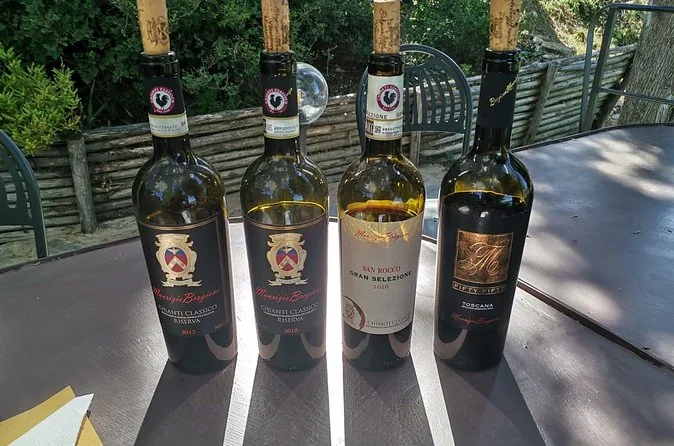
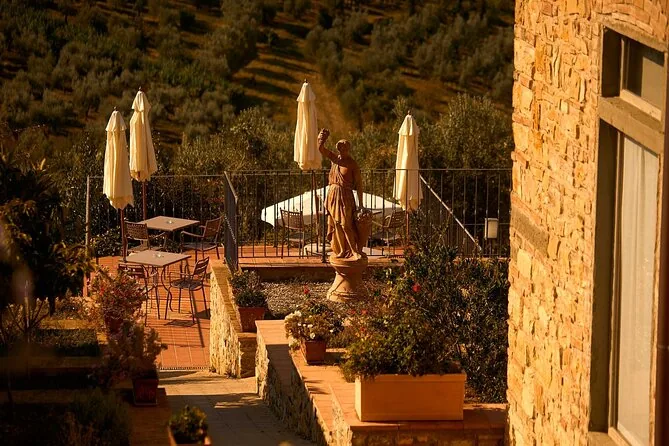
Three wineries, an olive mill and a three-course lunch, with a Super Tuscan option in a group of eight.
Explore the wine and olive oil trail Tour detailsIs San Gimignano in Chianti Classico?
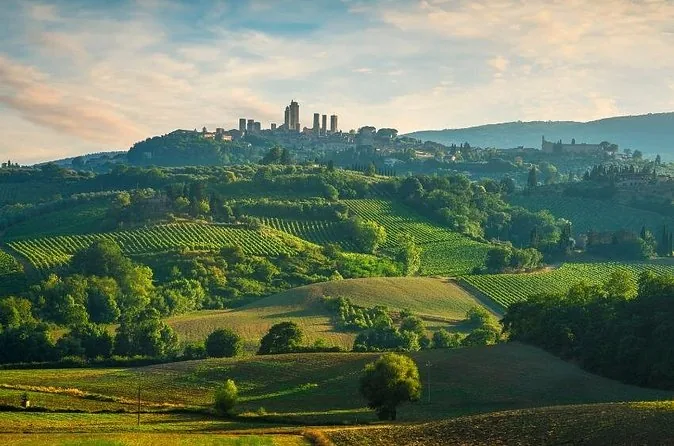
No. San Gimignano is famous for a white wine, Vernaccia di San Gimignano DOCG, and its reds are usually Chianti Colli Senesi.
San Gimignano is a lovely stop and lies a few kilometres west of the Classico border. Several cheap half days from Florence taste at Tenuta Torciano, near San Gimignano. They are not on our list for that reason: a Classico tasting it isn't. The Siena and San Gimignano day also ends at a winery in the hills just outside San Gimignano, with two or three wines.
If San Gimignano is on your list anyway, try a glass of Vernaccia there. It is Italy's oldest white DOC, from 1966.
Which Chianti tours actually taste inside the Classico zone?
Five do: the Classico half day, the Gray Line half day, the private tour, the half day from Siena and the Greve winery visit. The e-bike day and the town-hopping day pour outside it.
We checked each listing's stops and the wineries guests name:
| Tour | Where it tastes | Classico? |
|---|---|---|
| Small-group Classico half day | Two estates on the SR222 past Strada in Chianti and Greve | Yes |
| Two-winery half day | An organic winery near Greve, then a winery in the Sienese part, often Poggio ai Laghi near Monteriggioni (guests report) | Partly |
| Private tour | Ottomani at Strada in Chianti, Greve, Fattoria di Luiano | Yes |
| Half day from Siena | Castellina, Fattoria Lornano, Poggio ai Laghi | Mostly |
| Greve winery visit | Brogioni, Greve in Chianti | Yes |
| Vintage Fiat 500 day | Poggio Amorelli, Castellina in Chianti | Yes, for lunch |
| Vespa tour | Hills from Impruneta to Strada and Chiocchio (Greve) | Partly |
| Semi-private day | San Casciano area and San Michele a Torri | On the edge |
| E-bike day | Hills around Impruneta | No (Colli Fiorentini) |
| Siena and San Gimignano day | One winery outside San Gimignano | No |
None of this makes the others bad days out. It just tells you what is in the glass. The full price picture is in the price guide.
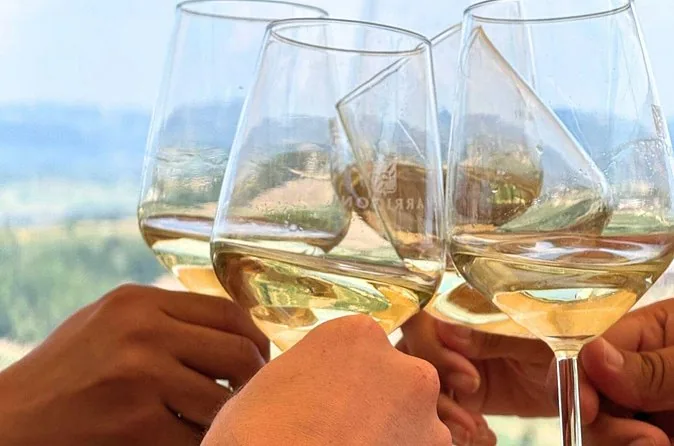
Our pick for Classico in a glass: two estates on the Chiantigiana, up to seven wines, and a minivan of eight.
Explore the small-group Classico half day Tour detailsFrequently asked questions
Is Chianti Classico better than Chianti?
Not always, but the rules are stricter: at least 80% Sangiovese, no white grapes and a smaller, older zone. A good Chianti Rufina can beat a dull Classico.
How do I recognise Chianti Classico in a shop?
Look for the black rooster seal on the neck and the words Chianti Classico DOCG on the label.
Is Montalcino or Montepulciano in Chianti?
No. Brunello di Montalcino and Vino Nobile di Montepulciano are separate DOCGs south of Siena, outside both Chianti zones.
Do Chianti tours from Florence visit Chianti Classico?
Many do, but not all. The Classico half day, Gray Line half day and private tour taste inside the zone; the e-bike day and the Siena and San Gimignano day do not.
Ready to book
Choose your tour
Free cancellation up to 24 hours before on every option. Prices are from-prices in USD and move with the season.
Small-Group Chianti Classico Half Day
Two Classico estates, up to 7 wines, 8 people at most
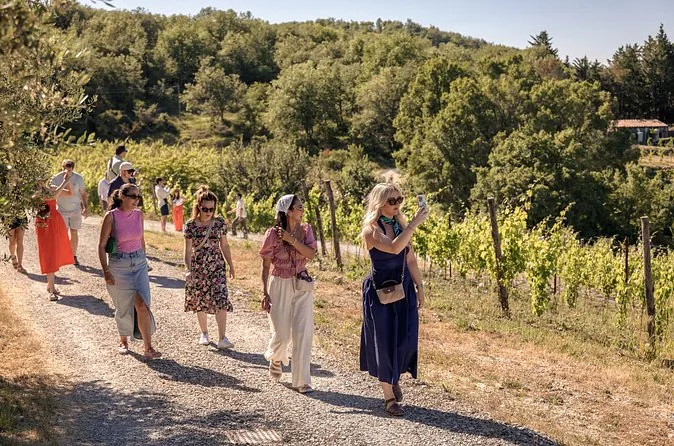
Half-Day Chianti Tasting at Two Wineries
- Two winery visits with cellar and vineyard walk
- 3 to 4 wines per winery with local food
- Air-conditioned coach from Piazzale Montelungo
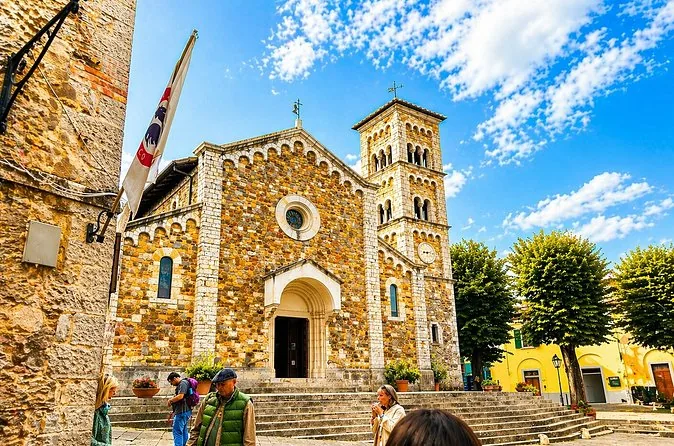
Chianti Half Day from Siena
Staying in Siena: Castellina and two tastings in half a day